
Irvine Kitchen Hood Cleaning supplies and replaces commercial hood filters in Irvine, CA and the surrounding cities including Tustin, Lake Forest, Westminster, Garden Grove and Anaheim. Filters are the cheapest part of a kitchen exhaust system and the one that does the most work, and a bank of them that no longer seats correctly is a permanent bypass no cleaning can compensate for.
Most kitchens discover a filter problem the wrong way round. Somebody notices grease dripping onto the line, or a filter that has to be forced into place, long after the geometry stopped working. Because we have the filters out on every cleaning, we tend to see it first.
Filters are also the only part of the system a kitchen handles daily, which means they get bent, dropped, run through a dish machine and put back slightly wrong more often than anything else. None of that is carelessness; it is what happens to a component that comes out and goes back in every week.
Getting the Filters Right
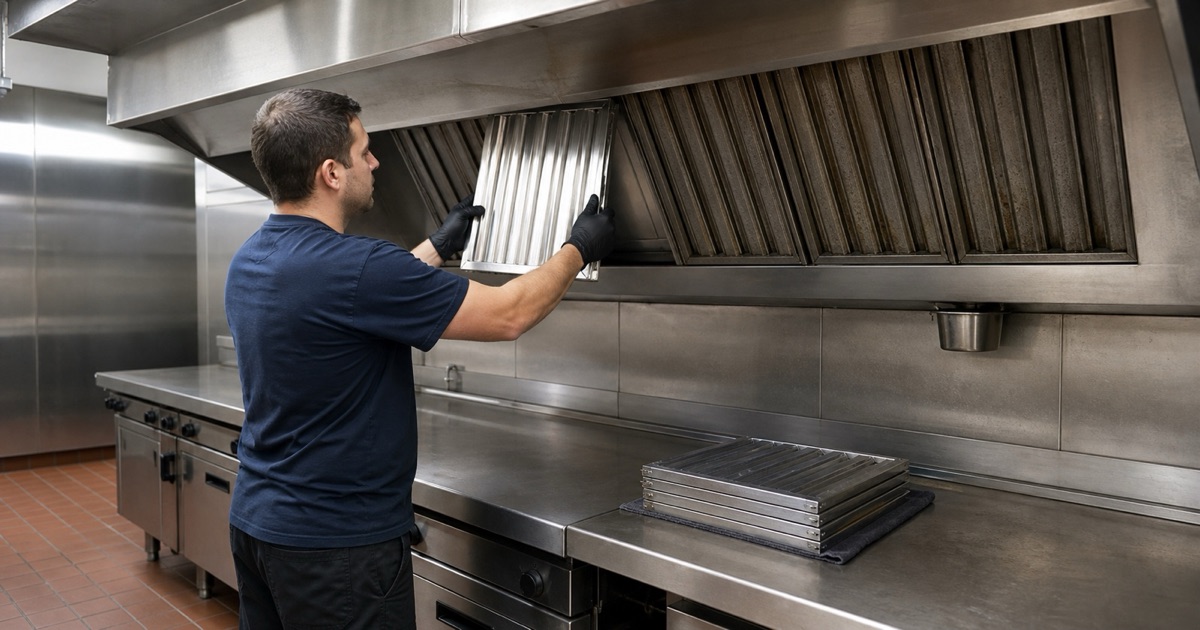
UL 1046 Baffle Filters and Why They Work
A baffle filter listed under UL 1046 separates grease from the airstream by forcing it to change direction, then drains what it captures back to a cup. That only happens when the filter is the right size, sitting at the designed angle, in rails that hold it there. The listing matters because it is what the fire authority expects to see over commercial cooking equipment, and an unlisted filter is a finding on an inspection rather than a matter of preference.
Why Mesh Filters Are the Wrong Answer
Mesh filters clog rather than drain, saturate through, and then release what they were holding onto the cook line below. They are prohibited over commercial cooking equipment in many jurisdictions for exactly that reason. Where we find them we will say so plainly and quote the correct replacement rather than cleaning them and returning them to a hood they should not be in.
Correct Sizing and Rails That Hold
A filter bank is only as good as its worst-fitting element, because vapor takes the easiest route through it every time. We size replacements to the hood rather than to whatever is close, and we straighten or replace bent rails and retention clips so the whole bank seats as designed. A gap of half an inch is enough to send vapor straight past into the plenum, which then loads at a rate that makes the whole cleaning interval look wrong when the filters were the problem all along.
Exchange Programs and Ongoing Supply
Exchange Versus Washing in the Sink
Washing baffle filters in a three-compartment sink ties up staff for an hour, rarely gets them genuinely clean, and sends everything they were holding directly into your drain line and grease interceptor. An exchange program swaps them on a set cycle for professionally cleaned filters instead. It is usually cheaper once the labor is counted honestly, and it keeps grease out of the wastewater side entirely.
Cycles That Match the Cooking
Exchange frequency follows the same logic as everything else in this trade: a daily wok line or a charbroiler loads filters far faster than a moderate-volume kitchen. We set the cycle to the cooking rather than to a standard contract term, and adjust it when the line changes rather than waiting for somebody to complain about drips.
Spares, Damage and Losses
Filters get dropped, bent, run through a dish machine that warps them, and occasionally disappear. Keeping a small spare set on site means a damaged filter comes out of service immediately rather than being wedged back into the rail because the kitchen has to open. We supply spares as part of an exchange arrangement rather than as an emergency purchase.
Drainage and the Cook Line Underneath
Grease Cups and Troughs
Filters drain into a cup or a trough, and that path only works when the cup is present, correctly seated and actually emptied. A missing cup sends captured grease onto the cook line or into the hood body instead. It is among the cheapest components on the entire system and one of the few faults a health inspector can spot from the customer side of the pass.
Drips, Slips and What They Signal
Grease landing on the line is the visible end of a filter problem, and it is a slip hazard and a contamination issue before it is a compliance one. It generally means saturation, a bypass around a badly seated filter, or a drainage path that has stopped working. All three are cheap to correct and none of them improve on their own.
What Filters Cannot Do
A filter bank captures a meaningful share of the grease in the airstream and never all of it, which is why the duct and fan still load and still need cleaning. Filters that are exchanged diligently extend the interval; they do not remove the obligation. Anyone selling filter service as a substitute for cleaning the system is selling something the code does not recognize.
- 20+ Years in Orange County
- Overnight & Between Services
- Photographed to Bare Metal